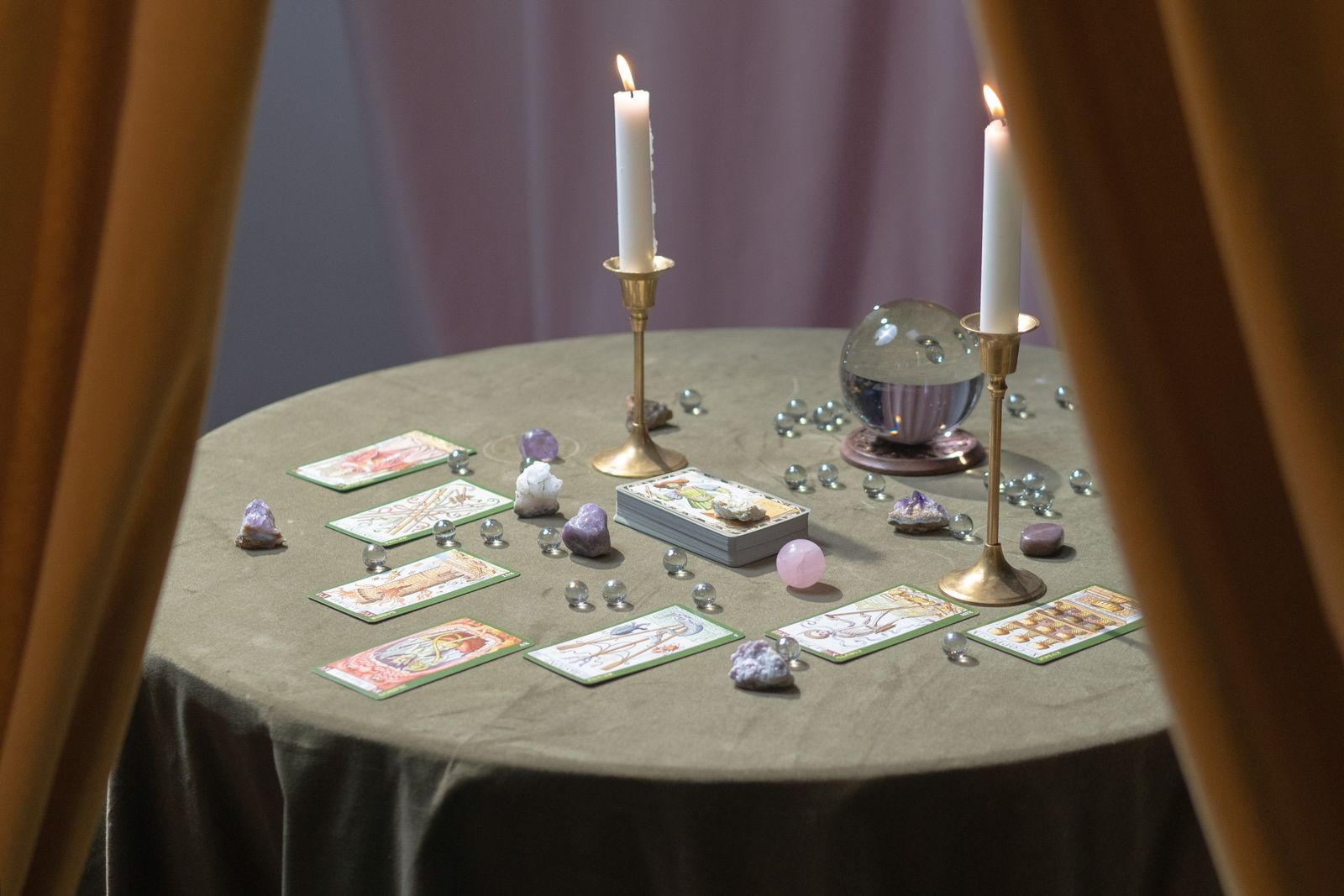
An omen you can stand on
Sixteen figures of earth and chance, cast for the practical ventures of life — property, partnerships, launches. The oldest oracle I practice, and the bluntest.
Sixteen figures, one verdict
Geomancy was the oracle of medieval merchants and builders: the caster makes random marks in sand — I use consecrated sand and casting dice — and sixteen figures emerge, each with a temperament. Some figures gain, some lose, some guard, some betray. Read together in a shield chart, they give a verdict on a venture.
A geomancy sitting is forty-five minutes devoted to one undertaking: buying the apartment, signing the partner, launching the business. You leave knowing whether the ground is firm, and what to watch while you build.
Every geomancy sitting holds
- Full shield-chart castingAll sixteen figures generated by your own hand marks — never pre-drawn.
- One venture, examined deeplyThe whole sitting serves a single decision — depth over breadth.
- Favourable-timing windowThe figures' read on when to move, and what to avoid meanwhile.
- Written chart and verdictYour shield chart drawn out, with the verdict in plain words.
From venture to verdict
Name the venture
We define exactly what is being weighed — the property, the partnership, the launch date — and set it as the chart's question.
Cast by your hand
You make the marks; the figures are yours, not mine. I build the shield chart from them and read each house aloud.
Weigh the omen
Firm ground or warning — either way you leave with the verdict, the timing, and the written chart for your records.
Questions, answered
Concrete undertakings: buying or selling property, signing contracts, choosing partners, launching ventures. Matters of the heart are better served by tarot; matters of ground and gold belong to geomancy.
Yes. You make your marks on paper at home while I cast in parallel at the studio; the figures have matched in hundreds of sittings. The ritual translates — chance doesn't care about distance.
Then you have saved yourself the most expensive kind of lesson. A negative verdict always comes with the figures' counsel — what to change, when to revisit, or which alternative ground is firmer.